Workplace & Return-to-Work Support
for Autistic & AuDHD Adults
Work, in progress.
Neuroaffirming telehealth OT support to shape accommodations and adjust demands, align with employers or self-employment, and return to work after leave.
Book a Free Discovery Call →Free 15-min call. No prep needed.
before you book.
The workplace gap
Neuroinclusive workplaces should not be the exception.
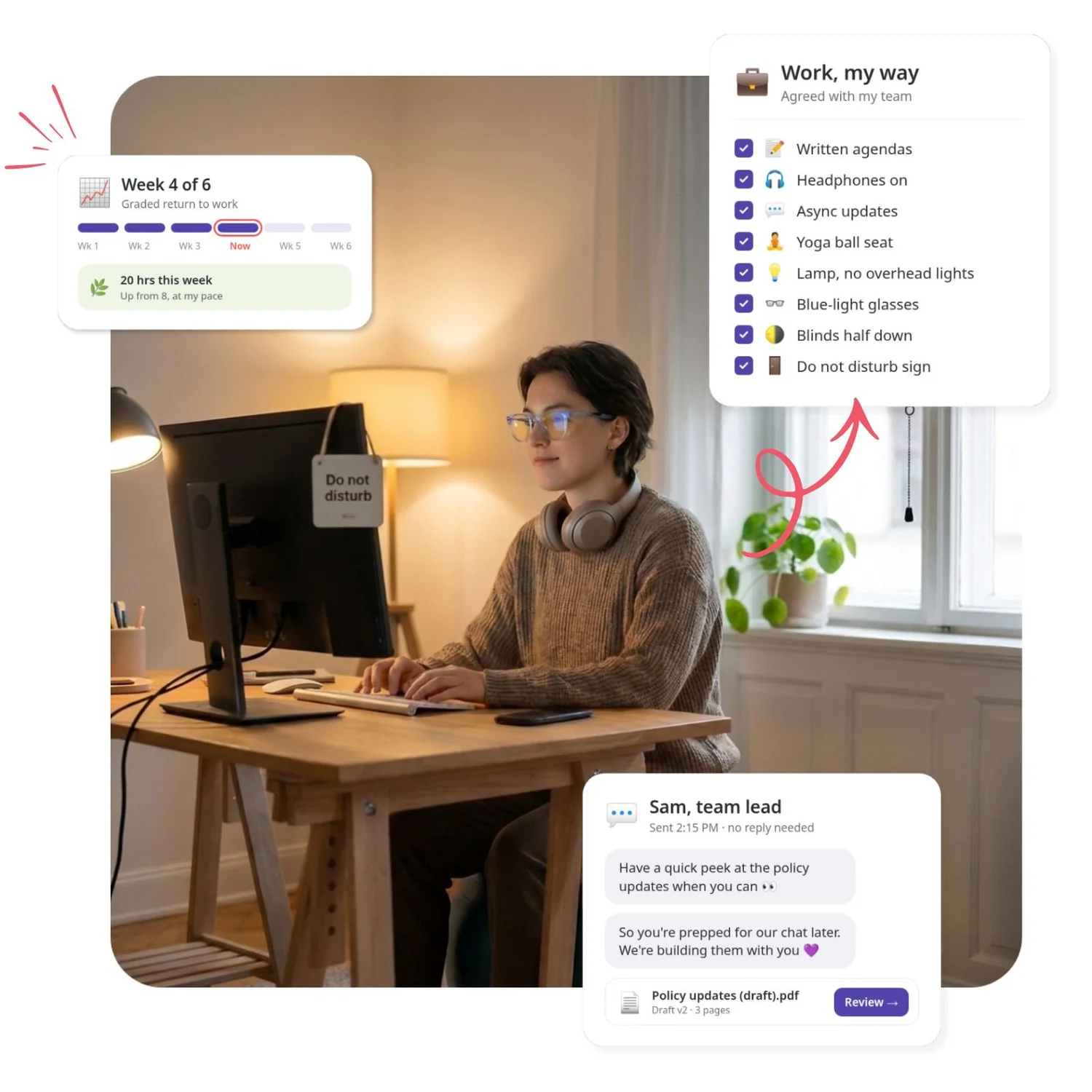
Open-plan noise, unwritten social rules and constant context switching add up all day, and when accommodations stay vague or unspoken, asking for what you need starts to feel like admitting you can’t cope.
Workplace & return to work
Is This You?
Workplace differences impact 📆 routines, 💼 responsibilities, 🧠 regulation, ☺️ rest, and 💬 relationships. Here are some of the experiences our ND-Affirming OTs have supported.

Accommodations on Paper
HR approved your accommodations months ago. Your manager still books surprise calls and shifts priorities over Slack. Nothing has really changed. You’re tired of re-explaining, and wondering if asking was worth it.
Coming Back After Leave
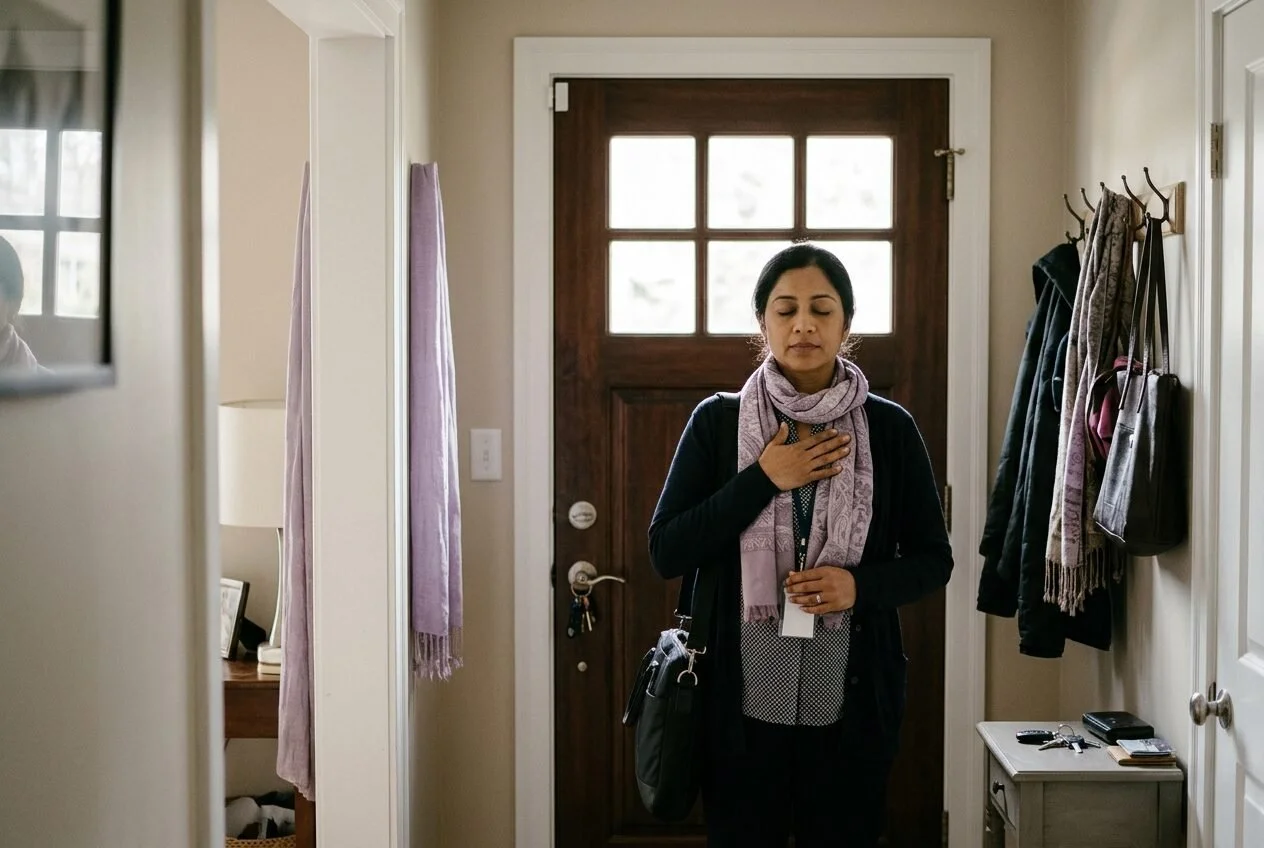
You’ve been on leave since burning out. Your return date is set, and the plan is 'fewer hours.' Opening your inbox makes your chest tight. You want to go back without crashing again.

Masking Through Meetings
You rehearse what to say before every stand-up. The open-plan office hums, buzzes and interrupts. You do great work, but the small talk and unwritten rules take more out of you than the job.

Working for Yourself
You left a job that didn’t fit to work for yourself. Now you’re the boss, the bookkeeper and the sales team. Client work gets done. Invoices, taxes and follow-ups pile up, and the freedom feels heavy.

The Disclosure Question
You’re wondering whether to tell your employer you’re Autistic. It could explain a lot and open the door to support. It could also change how people see you. You keep drafting the email, then deleting it.

Newly Identified Mid-Career
Fifteen years in, you just learned you’re AuDHD. Suddenly the missed promotions, the 'too blunt' feedback and the Sunday dread make sense. You’re relieved, and unsure what to change at work now.
Helped 1,000+ ND clients across Canada.
Our approach
Accommodations are more than paperwork.
A doctor’s note won’t fix a noisy office or a manager who doesn’t understand.
Our OTs can work with you and your employer to obtain and retain meaningful durable employment or return-to-work after leave.
ND-Affirming OT can look like:
-
Accommodations that actually stick
-
Disclosure on your own terms
-
A return that lasts
-
Self‑advocacy without the dread
And much more, built around your well‑being and autonomy.
-
Free Discovery CallWe learn more about your support needs, answer questions, and confirm fit.
-
Match with Your OTSomeone who deeply understands Autistic and AuDHD adults and teens.
-
Work That Fits Your NeurotypeAccommodations, demands and return plans shaped around you. No pushing, no masking.
Free 15-min call. No prep needed.
before you book.
How It Works
Getting Started
Workplace FAQ
Autistic & AuDHD work life, explained
Answers for late-identified Autistic and AuDHD adults, and the people who support them.
Many Autistic and AuDHD adults describe doing two jobs at once: the work itself, and the masking, sensory filtering and social decoding around it. Open offices, constant messages and unclear expectations add load that colleagues may never notice. An OT helps you name those demands and change what can change.
Struggling at work after years of coping often reflects accumulated load rather than a lack of skill. Autistic burnout is often described as long-lasting exhaustion, lower sensory tolerance and losing skills you used to manage. An OT can help you sort out the pattern. Your doctor can rule out medical causes.
For many late-identified Autistic and AuDHD adults, more responsibility at work arrives alongside caregiving, hormonal changes and years of masking. Strategies that carried an early career can stop working. Many people first explore being neurodivergent at this stage. OT helps you rebuild work routines around your current capacity.
With AuDHD, interest-driven focus can make engaging work feel effortless, while routine admin, unclear priorities or sensory load can feel impossible. Many people cycle between overcommitting and burning out. OT helps you match tasks, structure and accommodations to how your brain works, so the good stretches last longer.
OT looks at your job demands, workspace, schedule and energy, then translates your needs into clear, functional accommodation requests. For return to work, OT builds a graduated plan with check-ins and early warning signs. Support can include employer meetings, disclosure planning and self-employment structure, always at a pace you choose.
Everyday OT is a neurodiversity-affirming occupational therapy clinic for diagnosed, late-identified, or self-identifying Autistic and AuDHD teens and adults, and the people who support them. For workplace and return-to-work support, our OTs identify the job demands, sensory conditions and communication patterns that drain Autistic and AuDHD workers, then write clear accommodation recommendations and graduated return-to-work plans. Support can include employer or HR meetings, disclosure planning, self-employment structure and coaching that protects energy and autonomy. Everyday OT offers telehealth across BC, Alberta, Ontario, and Atlantic Canada, plus in-person OT in Vancouver, Burnaby, Squamish, Victoria, Canmore, the Tri-Cities and Calgary.